Treve Wearne: Reviving humanity in the sales process requires a digital approach

Written by Treve Wearne, CEO and Founder of Nazca Services
“Love and compassion are necessities, not luxuries. Without them humanity cannot survive.” This famous quote from the Dalai Lama is a sensible and accepted rule of thumb for most of us as we live our daily lives. So why has its essence been lost in the business, and more specifically, sales domain?
Too often in the modern climate, we see instances where sales, as an industry and as a process, has lost its humanity, its compassion and its personability. This is almost understandable given the KPI, data analytics and performance-driven industry it has become. But it doesn’t detract from the fact that the buying-selling dynamic is based around humans. And it therefore stands to reason, that a sense of humanity must remain.
When looking at recent statistics generated by The Brevet Group, you can begin to see why the trapdoor of disengaged or soulless sales processes is easy to fall into, but also why it’s vital to buck that trend.
As many as 80% of sales require at least five follow-up calls, yet fewer than half persist past one call-back. This lack of acknowledgement of the person at the other end of this relationship is compounded by an even more concerning figure, whereby only 13% of customers believe that a salesperson understands their needs.
The ability to achieve personability comes with time as well as effort. It’s not an algorithm-driven skill to bond and instil trust. This is supported by the fact that 78% of salespeople who use social media outsell their peers.
By just changing the environment to one built around personability and more social frameworks, the likelihood of sales success is elevated. Now imagine what can be achieved if that same level of relationship-building seeps into your entire approach and psyche.
An unsustainable business model
It is this transition back to a behaviour that should come naturally, that some of us have tried to champion for some time now. My own reason for being in business is based on the belief that sales and buying are entirely human and emotional experiences for everyone involved.
It sounds obvious, but actually goes against the grain of what we’re seeing in the sector as businesses become more and more consumed by processes, targets and technologies. The gap between what buyers evidently respond to, and how sellers actually adhere to that demand is widening. Not only can this result in lost opportunities in the immediate term and on a personal level, but it can also cause longer-term reputational damage for the company.
In essence, to continue in this vein is to encourage an unsustainable business model, no matter how many gadgets, tools and innovations you have at your disposal. And that’s why we’re urging forward-thinking sales organisations to stop and rethink. And, more importantly, to reintroduce that overlooked sense of humanity back to the core of their operations.
A change of mindset
It doesn’t necessarily have to be a complicated overhaul. Your objectives remain the same, and the adopted tools that give you a better grasp and management of your performance metrics are still progressive. It’s simply a way of changing the way in which you assess those data points, and how you reach those stated objectives.
By introducing emotional drivers, engagements, wellbeing parameters and the notion of happiness, organisations have the opportunity to strengthen their pre-existing pipeline. This isn’t a reinvention of the wheel – just a better way of turning it.
Moreover, our championing the personalities that you have within your own business, as much as the personalities you’re pitching to, is important too. In this regard, by remoulding your culture and the way you operate internally, you’re more likely to promote a more content, productive, engaged and loyal workforce. They, in turn, will then exude that same level of character and understanding in their work.
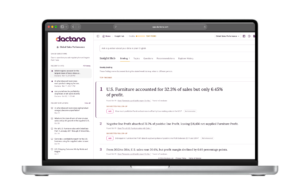
As evidence of leveraging contentment to achieve better revenues, some sales platforms already put wellbeing and happiness first; but with the mission of creating the strongest sales pipeline possible with the best conceivable outcomes.
Organisation still needs to focus on an ability to improve forecast accuracy through improved insights and an enhanced understanding of trends and patterns affecting your operations.
However, there is a mindset shift triggered amongst this differentiator, in that you need to attain visibility to view deals more objectively, rather than as a good/bad metric. From this more objective standpoint, you should then explore how to better earn trust among your own staff, and your prospective customers, to create accountability and continuous improvement ethos within your culture.
A blend of old and new
It seems almost counter-intuitive to achieve stronger levels of ‘humanity’ through digital assistance. But this is the realm that all industries are operating in at present. AI is being used to better inform human decision-making. Big data is giving executives clearer visibility for internal improvement, as well as improved transparency for external perceptions. Augmented reality is helping to better visualise physical space.
When used correctly, digital solutions can harness, and then improve upon, human natures. In sales, it can pinpoint where we’ve veered away from the best of human conduct to the detriment of what we’re trying to achieve.
It’s important to utilise tools and sales platforms that facilitates integration with existing customer relationship management platforms to help you unlock this potential – to more accurately forecast sales, to achieve quote targets, to better train reps, and to embed a more appropriate and lucrative set of behaviours within your team.
We’re entering a new, intelligent and enlightened age of sales based on traditional values, principles and relationships. Now is the time for sales leaders and teams to digitally revive their levels of humanity. After all, if there’s one thing this humanitarian crisis has taught us, is that we all need to look after each other.