Design Strategies to Improve Workplace Environments
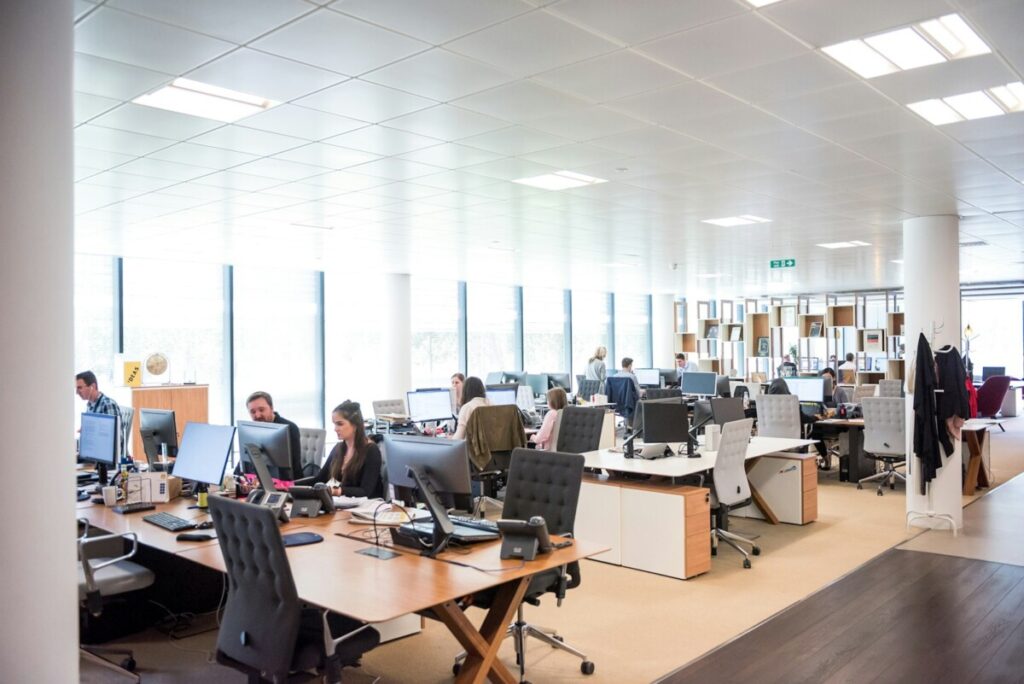
Workplace design affects how people feel, think, and work. A poorly planned space can lower morale, while a well-designed one can boost focus and comfort. Simple changes in layout, light, colour, and sound can make a huge difference and improve productivity enormously, as staying engaged is easier when the space supports employees’ needs. Keep reading to learn our key strategies for improving your workplace environment.
Use Natural Light and Balanced Lighting
Light has a direct impact on mood and energy. Natural light helps regulate the body’s clock, making people feel more alert during the day. Offices that rely only on artificial lighting often feel tiring, especially in the afternoon. Where possible, workstations should be placed near windows. If not, bright but soft, warm-toned LEDs that reduce eye strain, should be used, as harsh fluorescent bulbs make spaces feel sterile and uncomfortable.
Adding task lights at desks also gives your employees control over their own desk lighting. This flexibility helps reduce headaches and fatigue. It is also important to consider glare on screens as it can cause discomfort. Simple adjustments such as blinds or adjustable lamps can solve this. A well-lit workplace not only improves focus but also creates a more inviting atmosphere where people feel comfortable working throughout the day.
Manage Noise Levels Effectively
Noise is one of the most common workplace complaints. Constant background chatter, phone calls, or the sound of machines can break concentration. Open-plan offices often make this worse: while they promote collaboration, they can also create distractions.
Acoustic panels, carpets, and ceiling tiles can all reduce noise, as these materials absorb sound rather than allowing it to bounce around the room. Quiet zones or designated meeting areas also help. Providing noise-cancelling headphones is another simple solution that gives employees the choice to block out sound when they need focus. Background music can sometimes help, but it should be optional and at a low volume.
Ultimately, the goal is to create an environment where people can concentrate without unnecessary interruptions. By addressing noise, workplaces show they value employees’ need for both collaboration and privacy. Reducing unwanted sound is often a small design change, but it can make a big difference to daily comfort and productivity.
Choose Furniture that Supports Comfort and Health
Office furniture plays a central role in workplace design. Poor seating or desks that are the wrong height can cause back pain, neck strain, and long-term health issues. For this purpose, ergonomic chairs that support posture are well worth the investment. Adjustable desks, including standing options, also give people flexibility in how they work. A mix of seating types, such as sofas, stools, and quiet booths, adds variety throughout the space, allowing employees to choose where they feel their most comfortable.
Office storage should not be overlooked: cluttered desks can create stress, so providing proper storage solutions helps to keep spaces tidy. Even small details like footrests or monitor stands can reduce discomfort and avoid unnecessary strain. When employees can work without physical discomfort, they are more focused and productive, and good furniture design directly supports health and wellbeing.
Use Colour and Materials to Shape Atmosphere
Colour influences mood more than people often realise. Bright, bold colours can bring energy, while softer shades create calm. Offices that use only dull grey or beige often feel uninspiring. Adding colour does not mean painting every wall bright red; it can be as simple as using accents in furniture, artwork, or meeting rooms to create depth, with natural materials like wood, plants, or stone also creating warmth and breaking up the cold feel of plastic and metal.
Textures matter, too, and choices should reflect the purpose of the space: soft fabrics such as cotton and velvet make entry spaces feel inviting, while smooth surfaces such as marble and glass suit more professional settings such as meeting areas. The right use of colour and materials is crucial to make a workplace feel more engaging. It shows employees the space is cared for, also impacting how they feel about their work.
Design Flexible Spaces for Different Needs
Your employees need to have access to different environments for different tasks; a flexible design supports this. Open areas can be used for collaboration, while smaller rooms or pods can provide privacy for important or confidential calls or focused work. Meanwhile, breakout areas and kitchen diners encourage informal discussions, whilst quiet corners give employees time to recharge.
Flexibility also supports hybrid work models. With many teams working both at home and in the office, spaces need to be adaptable; movable partitions, modular furniture, and shared spaces allow for this. A workplace should feel like it can shift as needs change. Designing for flexibility reduces the pressure of fixed layouts and gives employees control over how they use the space. When people can choose where and how they work, they are more likely to feel comfortable and productive.