Before You Install a Heat Pump, Read This — It Could Save You a Fortune
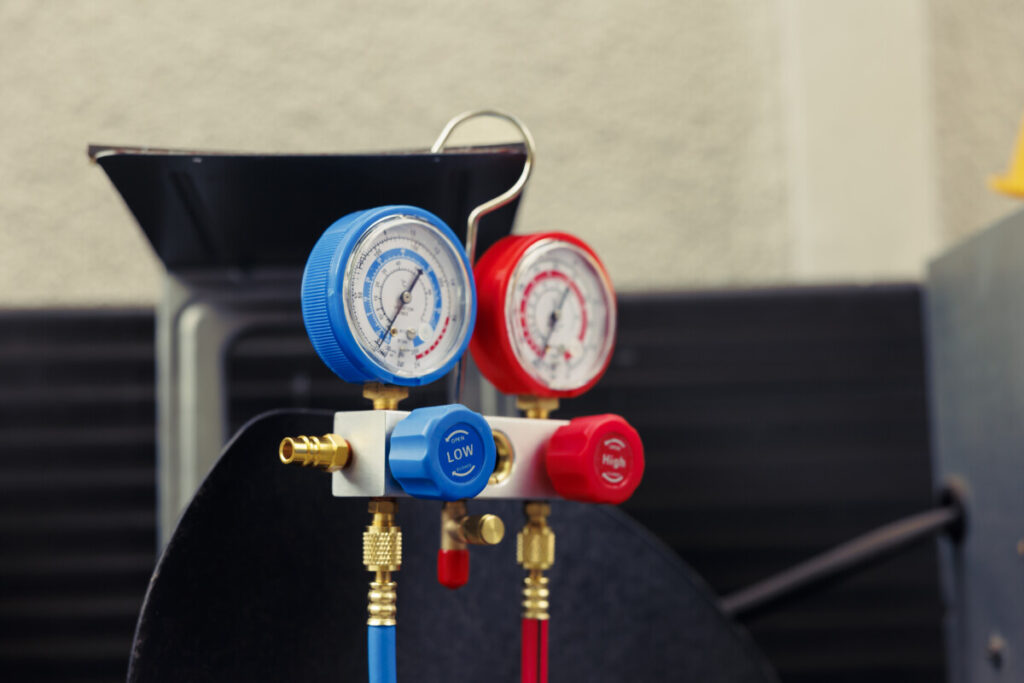
Close up of broken manometers used for checking hvac system freon pressure, in need of servicing. Set of barometer high or low refrigerant levels benchmarking air conditioner component
Between rising energy prices, carbon targets and government grants, heat pumps moved from niche technology to mainstream conversation in record time. Homeowners who never thought twice about heat pump installation are now deep into COP ratings, flow temperatures and grant eligibility. On paper, it all sounds like a no brainer: lower emissions, lower running costs, generous subsidies. But here’s the part most people only discover after installation, and usually the expensive way.
The Technology Isn’t Plug‑and‑Play — Even If It’s Marketed That Way
A boiler replacement is relatively straightforward. Swap the unit, connect to existing pipework, commission, done, but a heat pump installation operates on a completely different logic.
It interacts with insulation levels, radiator sizing, pipe diameters, cylinder capacity and even property orientation. It runs at lower flow temperatures, which means the emitters delivering heat into the rooms have to compensate with surface area. If installers skip detailed heat loss calculations and rely on rough estimates, the system can end up oversized, undersized or hydraulically unbalanced.
Insulation Isn’t Optional
One of the biggest misconceptions is that a heat pump itself creates efficiency, because it transfers heat slowly, steadily and at lower temperatures than combustion systems. If the property leaks warmth through walls, loft spaces or glazing, the pump has to run longer cycles to maintain comfort, but longer cycles mean higher electricity consumption.
In poorly insulated homes, running costs can rival or even exceed modern gas boilers, the exact opposite of what homeowners expect after investing £10,000 to £18,000 into renewable heating. Upgrading insulation before installation often delivers the biggest cost protection per pound spent.
Radiators are the Upgrade Most Quotes Underestimate
Heat pumps typically operate between 35°C and 55°C flow temperatures, traditional boilers can push 70°C or higher. Radiators sized for high‑temperature systems may deliver insufficient output under heat pump conditions, thus rooms take longer to warm, and the system compensates by running extended cycles.
Installers sometimes quote heat pump installs without factoring full emitter upgrades to keep the headline price attractive. Homeowners discover later that additional radiator replacements, often £2,000 to £5,000 depending on property size, are required to achieve expected performance.
Electricity Tariffs Change the Financial Equation
Before you go for the heat pump installation, you should know that they run on electricity, not gas, which reshapes operating costs. Efficiency metrics like COP (Coefficient of Performance) sound impressive, with 3:1 or even 4:1 energy output ratios, but real‑world performance depends heavily on electricity tariffs. Homes on standard variable tariffs may see narrower savings margins compared to those on time‑of‑use or renewable‑linked pricing.
Design Shortcuts Can Add Thousands Over Time
Heat pump performance hinges on system design precision. Pipework sizing, buffer tanks, volumizers, hydraulic separation and weather compensation controls all influence efficiency. If flow rates are restricted or cycling isn’t managed properly, compressors work harder than necessary.
Compressors are among the most expensive components in the system. Premature wear can trigger repair or replacement costs running into several thousand pounds, often outside standard warranty coverage if design faults are identified.
Grants Reduce Upfront Cost
Schemes like the Boiler Upgrade Scheme soften installation costs with grants up to £7,500. That funding makes heat pump installation more accessible, but it can also create a psychological shortcut where homeowners focus on subsidy value instead of system suitability. A discounted installation still becomes expensive if performance underdelivers for the next 15 years. The grant lowers entry cost, but it doesn’t guarantee operational savings.
Expert Heating Solutions is the company that can help you every time you need proper experts.
Image Freepik




