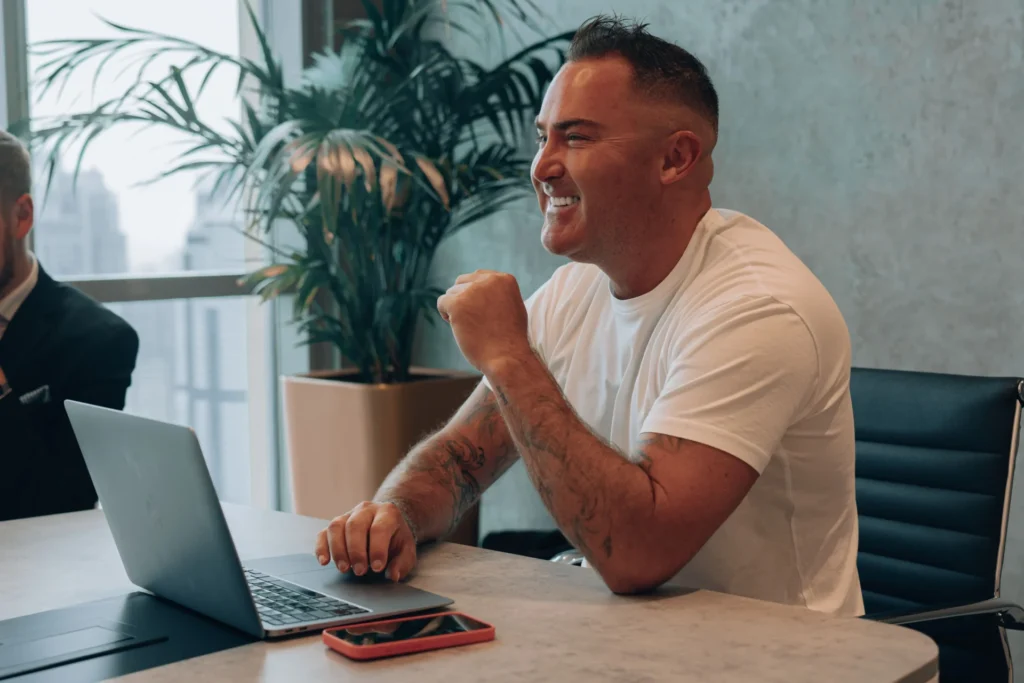
Matt Haycox, investor: how small businesses can protect themselves after Starmer’s resignation
Keir Starmer resigned as prime minister outside Downing Street on Monday, the sixth person to leave the job in seven years. The trigger was political, a Labour party that lost confidence in him after dismal May council results and the continued rise of Reform UK, but the message landing on every small business owner is economic. The country is about to spend its summer choosing a seventh prime minister in a decade while owners try to make payroll, hold their margins and plan past September.
That uncertainty is the part that actually hurts a business. Customers delay decisions, suppliers tighten terms, banks get nervous, and the people running small firms start waiting to see what happens before they do anything. The waiting is the mistake.
Matt Haycox, an entrepreneur and investor who has put more than £1 billion into UK businesses and now coaches founders through exactly these moments, argues that the owners who come out of political chaos ahead are the ones who stop watching Westminster and start working their own numbers.
The mistake most owners make when the politics turns
“Every time there’s a change at the top, I get the same calls,” Haycox says. “People asking what it means for them. Honestly? Almost nothing, unless you let it. A new prime minister isn’t going to ring you and pay your invoices. The businesses that struggle aren’t the ones with bad policy, they’re the ones that froze for three months waiting for certainty that was never coming.”
Small and medium firms make up the overwhelming majority of UK private-sector businesses and employ most of the private workforce, according to ONS figures, so when owners collectively pull back, the slowdown becomes real regardless of who holds the keys to Number 10. The first move, in Haycox’s view, is refusing to be one of them.
Control the cash before anything else
His starting point is always the same, and it is unglamorous. Know your cash position to the week, not the quarter. Most owners genuinely do not, and in a stable economy they get away with it. In an unstable one it is the thing that kills them.
From there the early moves are about defence. Build a cash buffer that covers a few months of fixed costs so a slow quarter is an inconvenience rather than an emergency. Chase your debtors properly, because a customer who is also worried about the economy will happily fund their nerves with your money if you let the invoice slide. And cut the dead costs you have been ignoring, the subscriptions and the half-used services that felt cheap when times were good.
“Cash isn’t king, cash is oxygen,” Haycox says. “You can survive a bad month with no profit. You cannot survive a Tuesday with no cash. Find your number, the amount that lets you sleep, and protect it like your life depends on it. Right now it sort of does.”
Get your funding sorted while you still can
The harder lesson is about credit, and the timing of it. Lenders react to political and economic uncertainty by getting cautious, which means the window to arrange finance is open now and tends to narrow exactly when owners finally decide they need it. British Business Bank research has consistently shown that smaller firms struggle to access funding even in calm conditions, and a leadership vacuum does not make banks braver.
Haycox’s advice is to line up funding before you are desperate for it, when you can still negotiate from a position of strength, and to avoid depending on a single lender. A business with one bank and no alternatives has handed that bank all the leverage. A business with a couple of facilities in place, even unused, has options. This is the area he spends most of his own time on, and founders who want to dig into it can explore alternative business funding options with Haycox directly.
Make the business harder to kill
The next moves are about the offer itself. Owners instinctively reach for discounts when they get nervous, which is usually backwards. If anything, this is the moment to sharpen what you sell and charge properly for it, because a strong offer survives a downturn and a weak one was always going to fail, the politics just exposed it sooner.
Concentrate on your best customers rather than chasing every lead. A small group of clients who value what you do and pay on time is worth more in a shaky market than a long list of price-shoppers. And wherever the model allows it, push toward recurring revenue, the retainers and subscriptions and repeat arrangements that let you forecast next month instead of praying for it.
“Most businesses don’t have a sales problem in a downturn, they have an offer problem that good times were hiding,” Haycox says. “If you only win when the economy is roaring, you don’t have a business, you have a passenger seat.”
Play offence while everyone else hides
The final point is the one most owners miss because it feels counterintuitive. A market where your competitors are frozen is a market where attention and customers are cheaper than they have been in years. The firms that keep marketing, keep selling and keep showing up while everyone else waits out the news cycle take share that is genuinely hard to win back later.
Part of that is owning a direct line to your customers rather than renting one. An email list, a community, an audience that hears from you without an algorithm in the middle is an asset that does not care who the prime minister is. Build it now, because it compounds, and because the owners who have one barely notice the months when everyone else is paralysed.
What this actually comes down to
None of this is about politics, and that is Haycox’s whole point. A resignation outside Downing Street makes for a dramatic week, but it changes very little about the levers a small business owner actually controls. The cash, the costs, the funding, the offer, the customers, the willingness to keep moving when others stop. All of it sits on your side of the desk, not Westminster’s.
“The headlines will tell you the country’s in chaos, and maybe it is,” Haycox says. “But your business doesn’t live in the headlines. It lives in your bank account and your customer list. Sort those two out and you’ll be fine no matter who’s in charge by Christmas.”
Matt Haycox is a UK entrepreneur, investor and business mentor who has funded over £1 billion of business activity. He works with founders on funding, growth strategy and financial discipline, and hosts the No Bollocks with Matt Haycox podcast. Find out more about Matt Haycox’s work with founders.