Kazakhstan’s New Parliament Matters to Britain’s Economic Security
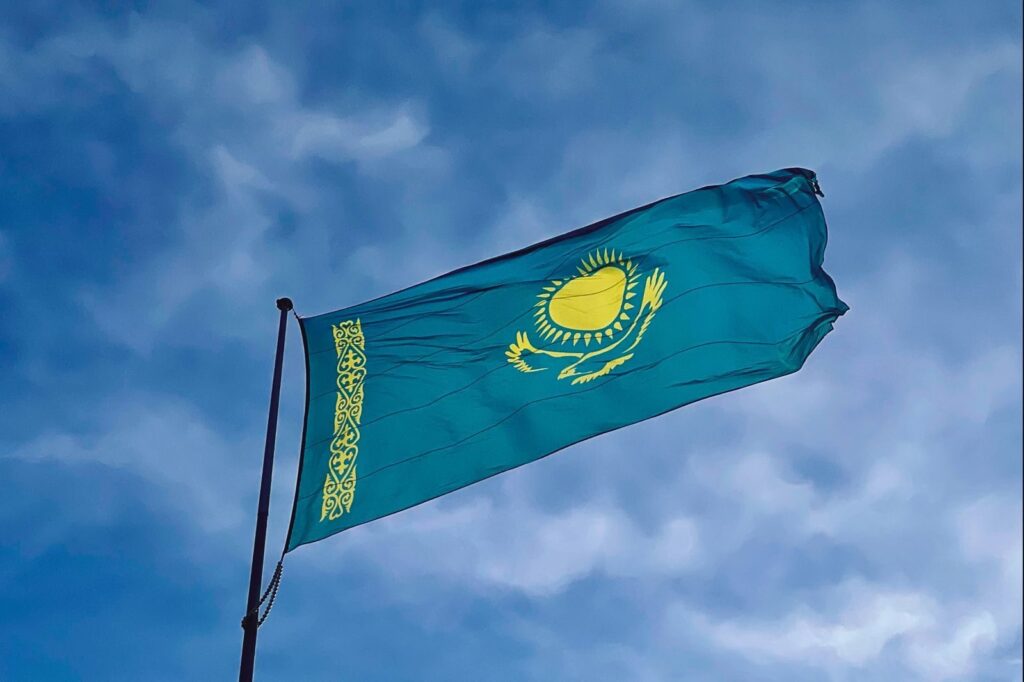
Kazakhstan has elected the first Kurultai (Parliament) under its new constitutional order, completing a political transition that began with the referendum in March. Final results put voter turnout at 74.08%, with the Adilet Party receiving 71.17% of the vote. Four other parties – Auyl, Respublica, Aq Zhol and the Nationwide Social Democratic Party – also cleared the 5% threshold, giving the new parliament representation from five parties. Adilet’s clear majority gives it the numbers to drive the legislative programme associated with President Kassym-Jomart Tokayev’s reforms. That majority offers continuity, but it also places responsibility on Adilet to demonstrate that the new institution can deliver effective scrutiny as well as faster government.
Why should this matter in Britain? Kazakhstan rarely enters the UK’s domestic political conversation. Yet it is becoming important to British economic security: as a source of critical minerals, a destination for investment and a transport hub connecting Europe and Asia. For Britain, reducing excessive dependence on a small number of countries does not mean withdrawing from global markets. It means building dependable relationships with stable, sovereign partners. Kazakhstan is one of them.
The election established a 145-member, single-chamber legislature, replacing the former Senate and Mazhilis (lower chamber of Parliament). Seven parties fielded 545 candidates. More important than the institutional terminology are the Kurultai’s powers. It adopts laws and the state budget, can question ministers and express no confidence in the government, and must consent to the appointment of the prime minister, vice-president and several senior officials. A unicameral structure should also make responsibility for legislation clearer: laws can no longer be passed between chambers while accountability becomes blurred.
This change forms part of a wider reform trajectory rather than an isolated electoral exercise. Since 2022, Kazakhstan has restored the Constitutional Court, reduced barriers to party registration, imposed new restrictions on presidential affiliation and family patronage, and sought to create a more rules-based relationship between the state, business and society. The system remains presidential and political development is unfinished. But reform should be measured by direction and accumulated institutional change.
The British stake is already concrete. The UK–Kazakhstan Strategic Partnership and Cooperation Agreement was ratified by Kazakhstan in May this year and presented to the British Parliament in July. It provides a framework extending across trade, investment, energy, transport, climate policy and other fields. Bilateral trade reached approximately $1.6 billion in 2025, while more than 500 companies with British participation operate in Kazakhstan. The new Kurultai will therefore be legislating amid a relationship with Britain that is rapidly expanding.
Critical minerals provide the clearest example. Britain’s Critical Minerals Strategy describes Kazakhstan as a case study in effective international cooperation. The country has deposits of almost every known element and is a globally significant producer of 18 minerals on the UK’s priority list, including titanium, beryllium and chromium. A joint venture involving British company Maritime House is developing rhenium recycling in Kazakhstan. Its output is already entering the Rolls-Royce supply chain and, at full capacity, could account for 25 percent of global rhenium supply. A second project, developed by London-listed and UK-financed Ferro-Alloy Resources, could eventually produce 10 percent of global vanadium supply.
Those figures show why the quality of Kazakhstan’s institutions has consequences beyond its borders. Minerals in the ground do not automatically produce secure supply chains. Projects require predictable licences, enforceable contracts, transparent procurement, infrastructure and environmental standards that endure beyond one minister or political cycle. Through legislation, budgetary oversight and scrutiny of government, the Kurultai will help determine whether agreements become investable projects. A stable majority can accelerate decisions, while the presence of other parties should provide opportunities to test their economic and social consequences.
The relationship should not be reduced to Britain extracting raw materials. Kazakhstan wants to move further into processing, manufacturing and technology, retaining more value and skilled employment at home. Britain can contribute mining finance, engineering, geological expertise, professional services and access to global capital markets. That creates a more durable bargain: Kazakhstan helps diversify supplies essential to British aerospace, advanced manufacturing and the energy transition, while British expertise supports Kazakhstan’s economic diversification.
Adilet’s majority provides Kazakhstan with a clear mandate to carry the reform programme forward and the parliamentary stability needed to translate policy into legislation. At the same time, the presence of other parties will bring a broader range of economic and social perspectives into the Kurultai. Its committees can now scrutinise spending, question ministers, refine legislation and help ensure that investment rules remain predictable. Elections are not the conclusion of institutional reform, but the moment when institutions acquire people, authority and responsibility. Kazakhstan has now reached that point with a legislature equipped to turn its reform ambitions into practical results.
Britain should not consequently view the result as a distant domestic event. It should see an opportunity to deepen relations with a strategically placed country that is modernising its institutions while pursuing a balanced foreign policy. If the new Kurultai converts political continuity into credible law, oversight and long-term economic policy, Kazakhstan’s reform trajectory will strengthen not only its own resilience but Britain’s as well.