Fashion expert on how to choose a winter suit you’ll wear all season
Between now and New Year, the diary fills up quickly. There’s the office party, a winter wedding or two, Christmas lunch and at least one invitation that says “smart” without explaining what that means.
For Mike Dobell, founder of menswear brand Dobell, that’s the best argument there is for owning a suit made for winter. Choose the right one, he says, and it can take you from the office to a wedding, a Christmas party and everything in between.
“December’s when you get the most wear out of a suit, so it’s worth having one that’s up to the job,” he said. “You want something with a bit of weight to it, so you’re not shivering on the walk from the car park, but comfortable enough to wear indoors all evening. Get the fabric and fit right, and you’ve got something that’ll see you through the season and well beyond it.”
His advice starts with the cloth.
Here, Mike shares his top tips on how to choose a winter suit you’ll wear all season-long.
- Weight
Cloth weight is one of the biggest differences between summer and winter tailoring, and one of the easiest things to overlook when buying a suit.
“Most people look at the colour, then the price, and never think about the weight,” Dobell said. “If the label doesn’t tell you much, lift the jacket off the rail. A winter suit should have some heft to it and hang properly.”
The trick is finding the right balance. A heavier cloth offers more warmth and structure, but a suit worn to a crowded Christmas party needs to be comfortable indoors as well as outside. For most men, a midweight or slightly heavier fabric is a sensible starting point.
- Texture
Weight isn’t the only thing that matters. The weave and finish of the fabric affect how a suit feels, how it hangs and how formal it looks.
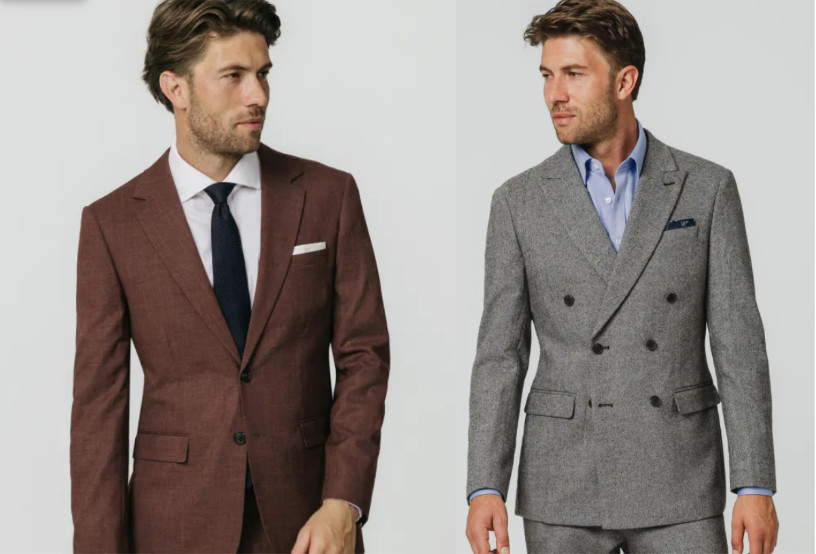
“Flannel is the classic winter cloth. It’s brushed, so it feels soft from the moment you put it on, and gives you warmth without necessarily adding bulk,” Dobell said.
“Tweed and herringbone bring a bit more character. You can see the texture across a room, which is half the fun of dressing in winter. If tweed feels a bit too country for you, try a twill. You still get some visual interest, but it looks just as comfortable in a city bar as it does at a country pub.”
For a suit that needs to work across several occasions, the aim is to choose a texture with personality without making the outfit difficult to dress up or down.
- Colour
Navy and charcoal remain the safest choices for a reason. Both work across formal occasions, pair easily with different shirts and ties, and are versatile enough to wear repeatedly without looking out of place. For anyone buying their first winter suit, either is a dependable starting point.
Once those essentials are covered, there’s more room to experiment with seasonal colours.
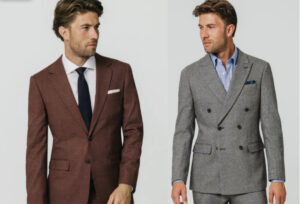
“We’ve brought in a green and a brown this season for exactly that reason,” Dobell said. “Brown with a pale blue shirt and a dark tie looks warm without trying too hard, while green is a natural choice for Christmas. Both give you something a little different without being difficult to wear.”
The key is to think about what you already own. A suit that works with your existing shirts, shoes and knitwear will get considerably more use than one that requires an entirely new wardrobe around it.
- Leave room for a layer
A changing room is warm and well lit. A bus stop at 11pm in December isn’t. A jacket that feels perfect over a thin shirt in the shop might become restrictive once you add a fine-gauge jumper or waistcoat.
If you plan to wear knitwear under your suit, try the jacket on with a similar layer before buying. You should be able to move comfortably without the fabric pulling across the shoulders, chest or buttons.
“That goes double if you’re a bigger build,” Dobell said. “A suit that fits properly across the shoulders and gives you enough room through the middle will always look sharper than one you’re squeezing into. You want to be comfortable sitting down at dinner as well as standing up for photographs.”
It’s also worth thinking about what you’ll wear over the suit. An overcoat should have enough room through the shoulders and body to sit comfortably over the jacket, while being long enough to cover it.
“If your suit jacket’s poking out from under your overcoat, one of them’s the wrong length,” he said.
- Think beyond one occasion
A good winter suit shouldn’t be reserved for the office party or the occasional wedding. Its real value comes from how easily you can wear it in different ways throughout the season.
Dobell suggests breaking up the suit once the occasion calls for something more relaxed. A textured jacket can work with dark jeans and a roll neck for evening drinks, while the trousers can be paired with a fine-knit jumper for a smarter Christmas Day outfit.
“Don’t feel you always have to wear the whole suit together,” he said. “A jacket can work on its own, and the trousers can become part of a completely different outfit. That’s how you get more out of it.”
It’s also a useful way to think about the purchase in the first place. Rather than judging a suit by how much it costs or how good it looks on one particular evening, consider how many times you’ll realistically wear it.
“A summer suit comes out for a couple of weddings and then lives in the wardrobe,” Dobell said. “A proper winter one is the thing you end up reaching for from the first frost through to February. Buy something versatile enough to work for different occasions, and you’ll get far more out of it.”