The Essential Guide to Automotive Warehouse Efficiency
Running an automotive warehouse comes with a lot of responsibilities. Across this sector of the UK’s vast warehousing industry, operators and employees have to be meticulous about:
- Receiving and unloading parts from different suppliers and logistics professionals
- Storing and organising a massive number of parts and equipment, keeping accurate stock of everything in the property
- Picking and packing specific parts to fulfil tasks and customer requests
- Shipping and dispatching, which involves proper loading practices and documentation
- General safety and maintenance across the workplace
But with all of these different tasks at hand, efficiency can easily start to fall to the wayside in an automotive parts warehouse. Ensuring that everything runs smoothly requires a set of clear principles to be followed. This article will explore the principles of warehouse management in automotive industry settings, to help operators to maximise their workflows and productivity.
How to optimise an auto warehouse layout and utilise space
Understanding how to lay out your physical space is arguably the most important part of consistent efficiency. You’d be surprised how quickly workflows can fall apart without a considerate approach to organisation. For example, you should create flows with materials to minimise travel from receiving to shipping to storage. An L-shaped or U-shaped flow might be the right approach.
Consider how warehouse automotive parts have to move and how to make that as smooth as possible. ABC demand prioritisation is a great method, working as such:
- A items are the fastest movers, positioned closest to picking and shipping zones
- B items are of a medium priority
- C items are slower movers and can be stored in less accessible areas
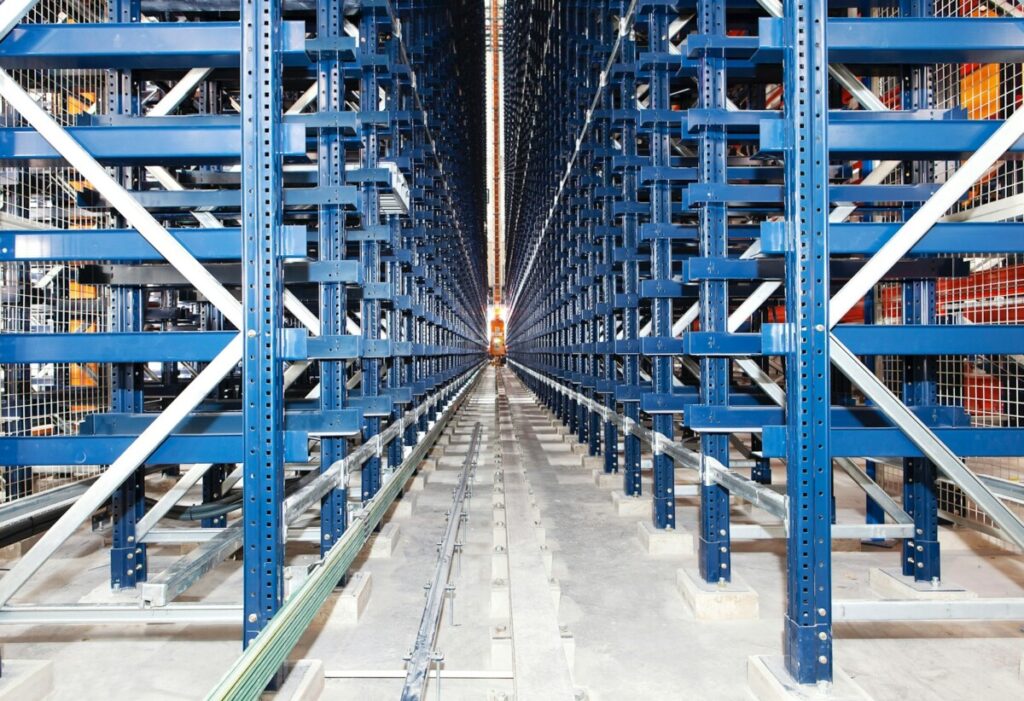
Similarly, you should always make an effort to use as much vertical space as possible, whether that’s through using goods lift and mezzanine floor setups or simply through high-rise shelving. Floor space is often limited, so if you have the ability, move into vertical space.
To maximise floor space, you should keep aisles clear and wide for your handling equipment, along with all your foot traffic. Finally, make sure that everything has a clear location and a corresponding label, rather than belonging in general locations.
Ensure you master inventory management
A proper layout needs to be supplemented with a strong sense of inventory management; otherwise, all your physical organisation will lack the stock it needs to be truly effective.
This means using elements such as:
- Warehouse management systems to track inventory movement and stock levels
- Tracking technology, such as barcode scanning and RFID to log every transaction
- Historical sales data is leveraged to forecast future parts needs
- Daily or weekly cycle counting, rather than full-scale yearly stock checks
- Organising related auto repair parts into pre-packaged kits to reduce picking time
Partnering your inventory standards with a solid physical layout will give your warehouse the infrastructure it needs for consistency.
How to streamline your staff’s processes
Minimising human error and smoothing out workflows will ensure efficiency in an auto parts warehouse. Of course, this starts with hiring the best possible staff for the job, but there are also plenty of principles that operators can abide by, such as:
- Optimising picking routes to reduce travel distance (in line with ABC prioritising)
- Standardising work orders for issuing parts and centralising inventory access to the right staff
- Offering comprehensive training that leads to a strong checkpoint quality control process
- Make sure your staff tidies as they go to increase safety and reduce clutter
- Use a management software for things like scheduling, HR and other communications to centralise them and speed up responses
- Offering access to modern automation, storage, handling and data technology to optimise regular operations
A person-first approach is vital to efficiency in automotive warehouse settings.
Enhance your automotive warehouse today
With these guidelines, you should be able to increase your auto warehouse efficiency for the better. So take what you’ve learnt here and apply it, making sure to keep an eye out for new technology and developments in publications and other channels.