How UAE Capital Is Financing Energy Infrastructure Across Emerging Markets
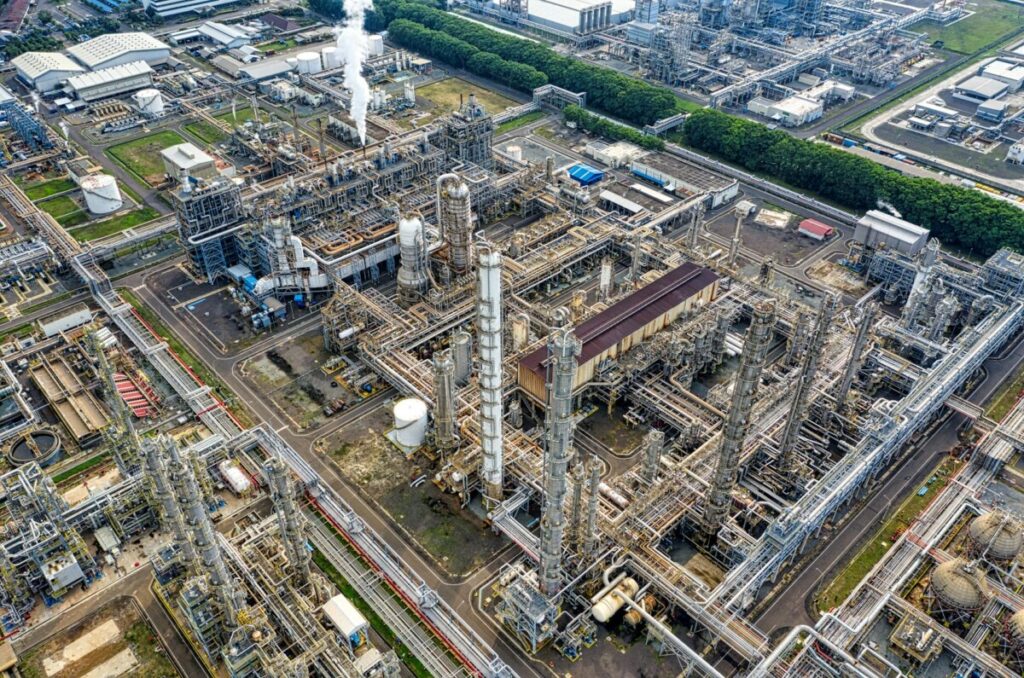
Factories cannot operate without electricity. Hospitals cannot refrigerate vaccines. Schools cannot run digital classrooms after dark.
Emerging markets and developing economies received only 15% of global clean energy spending in 2024, according to the World Resources Institute. Africa holds 60% of the world’s best solar potential but accounts for just 1% of installed solar photovoltaic capacity. Over 40 million Pakistanis lack grid access entirely. These deficits do not merely inconvenience populations; they prevent entire economies from participating in global value chains.
Sheikh Ahmed Dalmook Al Maktoum, Chairman of Inmā Emirates Holdings, has committed 1,450 megawatts of generation capacity across Pakistan and Ghana. His investments rest on a premise that the UAE tested domestically. Infrastructure unlocks everything else.
The UAE’s Path to Energy Expertise
The Emirates transformed from a sparsely populated territory into a federation that generates 183.67 terawatt-hours annually in half a century. That transformation required building institutional knowledge alongside physical infrastructure.
Mohammed bin Rashid Al Maktoum Solar Park now operates as the world’s largest single-site solar installation, with planned capacity reaching 5,000 megawatts by 2030. Barakah Nuclear Energy Plant provides 25% of the UAE’s electricity, making the UAE the first Arab nation to operate nuclear power. Abu Dhabi Future Energy Company (Masdar) has deployed more than $20 billion into renewable programmes globally.
The institutional capability of this scale was developed through trial over decades. Grid integration, workforce training, regulatory frameworks, and supply chain localisation required iteration. UAE Energy Strategy 2050 commits $54 billion to continued domestic renewable expansion while simultaneously exporting that expertise abroad.
What distinguishes this expertise from Western energy knowledge is its origin. Mature economies refined systems inherited from earlier generations. Gulf states were built from bare desert. That greenfield experience transfers more directly to emerging markets facing similar starting conditions than retrofitting knowledge from industrialised nations. Managing grid expansion amid rapid demand growth, training workforces without existing technical education infrastructure, and navigating regulatory environments still under construction all mirror challenges the UAE encountered and resolved within living memory.
What Does Sheikh Ahmed Dalmook Al Maktoum’s Energy Portfolio Commit?
Inmā’s portfolio comprises 1,450 megawatts across three projects, each calibrated to distinct national requirements. Pakistan receives 1,200 megawatts of solar and wind capacity over a 15-year development timeline. Ghana gains a 250-megawatt thermal plant addressing immediate industrialisation needs. Equatorial Guinea hosts a completed 36.6-megawatt diesel installation built for supply reliability.
Project durations matter as much as megawatt figures. Pakistan’s 15-year initiative permits workforce development and supply chain integration alongside physical construction. A separate 10-year Enertech partnership supports electric vehicle infrastructure in the UAE.
Combined output capacity exceeds that of many smaller nations. Projects of this scale shift energy mixes measurably rather than marginally.
How Does Pakistan’s Grid Gap Shape Investment?
Pakistan imported 17 gigawatts of solar photovoltaic equipment in 2024, according to the World Economic Forum. Battery storage imports reached an estimated 1.25 gigawatt-hours the same year. Distributed adoption accelerates, while grid-scale infrastructure lags.
“Capacity payments to power plants exceeded PKR 2 trillion (approximately $7 billion) in 2024,” the World Economic Forum reported. “These costs must be recovered through higher tariffs on fewer ratepayers regardless of actual usage.”
Pakistan’s Indicative Generation Capacity Expansion Plan targets 60% renewable electricity by 2030. Meeting that goal requires adding 13.6 gigawatts of solar and wind capacity. Sheikh Ahmed Dalmook Al Maktoum’s 1,200-megawatt commitment covers roughly 9% of the expansion requirement under a single bilateral agreement.
World Bank analysis indicates that utilising just 0.071% of Pakistan’s available land area for solar photovoltaics would meet total current electricity demand. Resources exist. Mobilising capital and expertise to capture them remains the constraint.
Rapid distributed adoption without grid-scale coordination creates its own complications. Households and businesses that install rooftop solar reduce their reliance on the grid, shrinking the ratepayer base that funds transmission infrastructure. Fewer customers absorb fixed costs, raising per-unit prices for those still connected. Without utility-scale projects feeding centralised grids, Pakistan risks a two-tier energy economy where those who can afford solar escape rising tariffs while those who cannot face compounding costs.
Ghana’s Power Sector Conditions
Ghana’s installed generation capacity reached 5,260 megawatts as of November 2024, with thermal sources comprising 66% and hydropower contributing 33%. Electricity demand grew 4.7% year-on-year, reaching projected consumption of 25,836 gigawatt-hours in 2025.
Oxford Business Group estimates the country needs more than $550 billion in capital investment to achieve net-zero emissions by 2060. Power and transport sectors absorb the majority of that requirement.
Energy sector debt stood at $3 billion owed to independent power producers as of September 2024. Financial strain has forced some generation facilities offline, creating supply gaps. Grid reliability issues prompted the relocation of AMERI thermal plant units to central Ghana during 2024 to stabilise northern distribution.
Inmā’s 250-megawatt project contributes approximately 5% to Ghana’s current dependable capacity. Thermal generation at this scale addresses industrial requirements that renewable intermittency cannot yet satisfy in markets lacking storage infrastructure.
Why Do Bilateral Agreements Fill Institutional Gaps?
Multilateral development banks historically provided long-duration energy finance. Private capital increasingly occupies portions of that space as institutional lenders face competing demands and political constraints.
Gulf sovereign wealth approaches energy investment differently than Western private equity. London Chamber of Commerce data shows UAE renewable energy investments exceeded $50 billion in 2023. Timeline horizons measured in decades, rather than quarterly returns, characterise the approach.
Host governments often perceive Gulf capital differently than alternatives. Chinese infrastructure finance carries concerns about debt dependency and geopolitical leverage. Western private equity faces skepticism about short-term extraction. Gulf sovereign wealth occupies a middle position, offering patient capital without the conditionality that multilateral lenders impose or the geopolitical anxieties that accompany other bilateral sources. Whether that perception reflects reality matters less than its effect on deal flow.
“Patient capital, institutional partnership, and investment horizons aligned with the generational timeframes that genuine development requires” describes Sheikh Ahmed Dalmook Al Maktoum’s portfolio structure. Concession agreements spanning 50 years for ports and 15 years for energy signal commitment structures that development institutions historically monopolised.
Limitations of Bilateral Investment
Grid integration challenges persist wherever renewable capacity expands faster than transmission infrastructure. Pakistan’s distributed solar growth has outpaced coordinated planning, creating inefficiencies that household-level adoption cannot resolve.
Host government fiscal constraints limit complementary public investment. Ghana’s accumulated energy sector arrears demonstrate how pricing structures failing to recover full costs create sustainability questions regardless of generation capacity additions.
World Resources Institute estimates that global grid investment needs to reach approximately $600 billion annually by 2030 to meet climate and energy targets. Sheikh Ahmed Dalmook Al Maktoum’s energy commitments total 1,450 megawatts across three nations. These figures are substantial individually, yet they address fractions of aggregate requirements.
Replicating bilateral approaches across the 100-plus emerging economies facing similar deficits would require coordination mechanisms that single-investor portfolios cannot provide. Scaling it remains a separate challenge.




