Kazakhstan’s Green Turn Is Opening a New Frontier for UK Investment
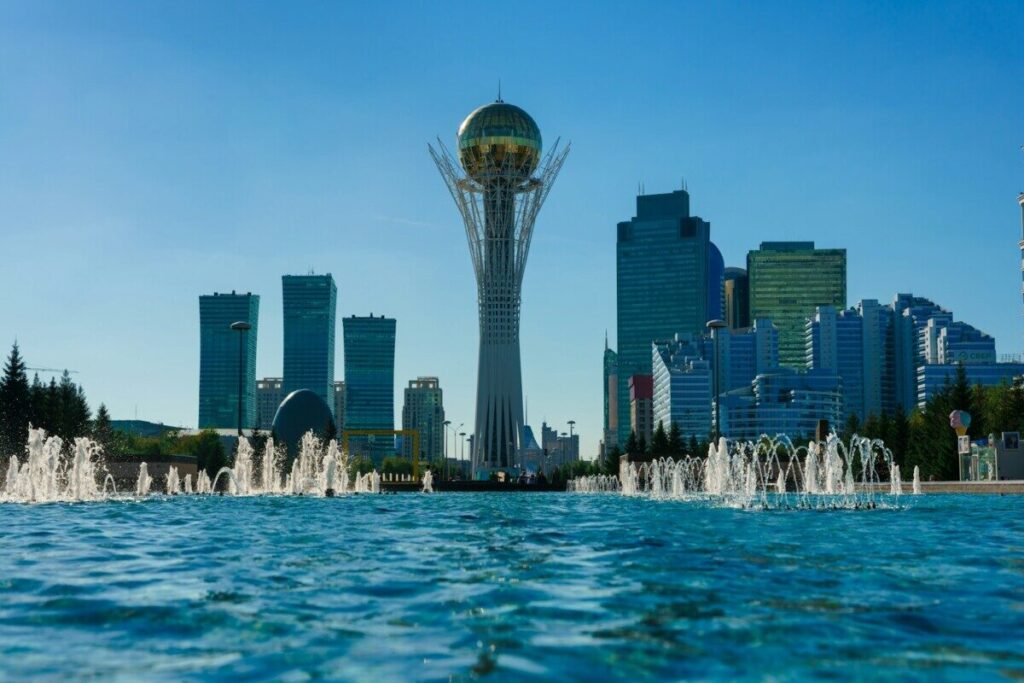
The Regional Ecological Summit held this week in Astana, the capital of Kazakhstan, may not immediately register on the radar of UK policymakers or investors. Yet beneath the surface, it signals the gradual emergence of Central Asia as a credible destination for green investment, infrastructure development, and climate-related finance – areas where British capital and expertise are well positioned to engage.
This was not simply another forum for broad declarations. It was designed, in the words of Kazakhstan’s President Kassym-Jomart Tokayev, as a platform to translate environmental concerns into actionable policy. “Ecology today is not limited to climate alone. It is the very foundation of human livelihood,” Tokayev said in his opening address, framing environmental policy not as a standalone agenda but as a central component of economic and social stability.
That framing matters. It highlights a broader repositioning of environmental policy in Central Asia – from a secondary concern to a driver of development strategy. Kazakhstan, in particular, is seeking to embed sustainability into its long-term economic model, while avoiding the kind of abrupt transitions that risk undermining growth.
This pragmatism was evident in Tokayev’s emphasis on balance, highlighting the need for environmental policies to be carefully calibrated so that countries can pursue sustainability without undermining economic growth and development. The framing closely mirrors debates in the UK, where the challenge increasingly lies in reconciling net zero ambitions with economic competitiveness and long-term prosperity.
Where the Summit becomes more relevant to a UK audience, however, is in its outcomes. Beyond the political messaging, the event is producing a Regional Action Programme for 2026–2030, alongside a series of agreements and initiatives spanning biodiversity, land restoration, water management, and climate cooperation. More than 50 documents are under preparation, and environmental investment agreements exceeding $2 billion are expected to be signed.
Taken together, these developments point to the early formation of a regional pipeline of green projects – precisely the kind of ecosystem that attracts international capital once it reaches a certain level of maturity. For UK investors, particularly those operating in infrastructure, environmental consulting, and sustainable finance, this is where the opportunity lies.
London’s status as a global hub for green finance is well established. British firms are deeply embedded in areas such as carbon markets, ESG investment, environmental risk assessment, and project structuring. What has been less clear is where the next wave of investable opportunities will emerge beyond established markets. Central Asia is now beginning to enter that conversation.
Water infrastructure, for example, is rapidly becoming a central focus of regional cooperation. Effective water systems underpin agriculture, energy production, and urban development – all sectors that require significant capital investment and technical expertise.
Similarly, the growing emphasis on biodiversity and land restoration opens space for nature-based solutions, an area where UK firms have developed considerable capabilities. Large-scale reforestation programmes, ecosystem protection initiatives, and carbon sequestration projects are not only environmental priorities; they are also increasingly tied to financial instruments, including carbon credits and sustainability-linked investments.
Energy transition is another area of alignment. Kazakhstan’s approach – maintaining oil and gas production while scaling renewables, nuclear energy, and cleaner technologies – suggests a hybrid model that mirrors many of the debates currently taking place in the UK. For British companies involved in energy transition technologies, from grid modernisation to emissions reduction, this creates potential entry points into a market that is still in its formative stages.
Importantly, the Summit also signalled a willingness to engage with international frameworks and institutions. Proposals such as the creation of a water-focused body under the United Nations, as well as efforts to align environmental governance with global standards, suggest that Central Asia is not developing in isolation. For UK stakeholders, this reduces the perceived risk of engagement by anchoring regional initiatives within broader multilateral structures.
The presence of a message from The Duke of Richmond and Gordon further underscored the international dimension of the event. In his written address to participants, the Duke highlighted the importance of foresight and commitment in caring for the natural world, noting that such gatherings “help build understanding, strengthen commitment and support action on challenges shared by all nations.” He also pointed to the interconnection between environmental protection, community resilience, and long-term prosperity, an observation that aligns closely with the Summit’s core themes.
This kind of engagement plays a role in shaping perceptions. It signals that Central Asia’s environmental agenda is not peripheral, but part of a wider global conversation – one in which the UK has both an interest and a potential role.
None of this suggests that Central Asia will become a major destination for UK investment overnight. Structural challenges remain, including regulatory complexity, varying levels of institutional capacity, and geopolitical uncertainty. But what the Summit in Astana demonstrates is that the region is beginning to move beyond rhetoric and towards implementation. For UK investors and policymakers, the question is no longer whether Central Asia will become relevant to the global green economy, but how quickly.