Inside Inmā’s Concession Portfolio, From Karachi Berths to Guyana’s National ID
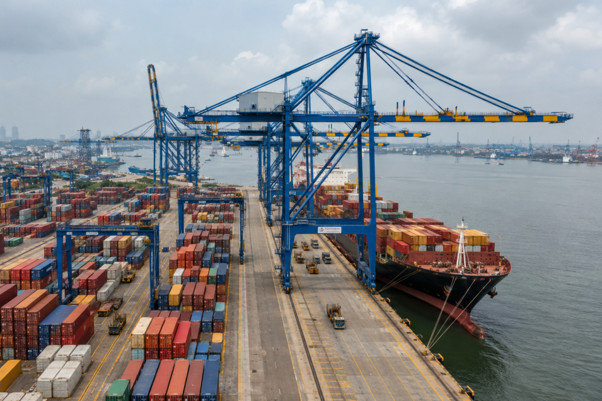
Karachi Port moved a record 2.65 million containers and roughly 54 million tons of cargo in fiscal 2024-25, and a slice of that traffic runs through berths whose operating cadence has been mapped out in 50-year increments. That timeline belongs to a concession associated with Inmā Emirates Holdings, a Dubai-based vehicle chaired by Sheikh Ahmed Dalmook al-Maktoum. It is one piece of a concession book that runs from Sub-Saharan African power infrastructure to Latin American digital identity, and it explains a lot about how the holding company actually operates.
A concession is a peculiar legal animal. It transfers operational control of a piece of public infrastructure to a private party for a defined period while retaining sovereign ownership of the asset. The arrangement only works if both sides accept that they are entering a multi-decade relationship in which the operator’s interests and the government’s interests have to stay workable through political turnover, market shocks, and price volatility. Inmā’s portfolio is built almost entirely on this kind of contractual architecture, and the company has positioned itself as a Dubai-based vehicle for Gulf economic diplomacy rather than a pure-play financial investor.
The Karachi case shows the structure in detail. At East Wharf’s Karachi Gateway Terminal, a joint venture led by Abu Dhabi Ports holds a 50-year concession with the Karachi Port Trust, backed by roughly $220 million of investment over the first decade for deeper berths, extended quay walls, and added container storage. A commitment on that timeline forces both parties to design for durability rather than short-term return.
Equatorial Guinea shows the same logic in energy. A 36.6 MW power plant came online there under terms that combine local government ownership with operational execution from the Inmā side, sized to supply the country’s new capital. Power generation in West-Central Africa is a delicate business. Demand growth is uneven, fuel-supply logistics are demanding, and tariff structures clear local political processes that foreign operators cannot fully control. A concession term that runs decades pushes both sides toward stability over a quick yield.
What the deal pattern reveals
The Inmā chairman’s investment history over the past ten years tracks a consistent preference for long-tenor structures with sovereign anchoring.
Profile data from CB Insights shows similar patterns across the broader investment activity that predated Inmā’s formation.
When the holding company was formally launched in October 2025, that history was consolidated into a single corporate structure with defined oversight committees and project-delivery pathways.
Guyana shows the digital end of the book. A national ID system has implications well beyond the technical rollout. It feeds into voter registration, tax administration, public benefit distribution and access to financial services. Get it wrong, and the consequences ripple across multiple ministries for years. Inmā’s involvement is structured, the company says, around an operating layer meant to remain in place through the full deployment and into the maintenance phase, the point at which most identification programs falter once consultants leave the country.
Why long-term contracts force a different operating model
Short-tenor work lets operators optimize for handover. Long-tenor work demands operators design for continuity, and that distinction reshapes how everything from staffing to financial structure gets built. Inmā has been explicit that its financing model combines sovereign budgets with multilateral development funding, donor support, and private co-investment, thereby keeping individual sovereign exposures manageable throughout project life cycles.
Sheikh Ahmed Dalmook al-Maktoum’s day-to-day work, according to publicly available profiles, sits at the relationship-management level: maintaining counterparty trust, structuring cooperation agreements, and overseeing the holding company’s direction. He is not the engineer signing off on substation specs at the Equatorial Guinea plant, but his office is the diplomatic point of contact when matters at the political level need resolution.
That role connects to the older family-office structure that preceded Inmā. Crunchbase records the Private Office as a longer-running investment platform that continues to operate alongside the holding company. Inmā formalized the impact-investment portion of that activity specifically.
Nawa Technologies and the technology overlay
Beneath the infrastructure assets sits Nawa Technologies, the holding company’s tech arm. Reporting from Entrepreneur summarizes Nawa’s pitch as Government of the Future, an umbrella for cloud migration, enterprise-platform deployment, cybersecurity, and service-delivery design. The work travels alongside the physical infrastructure book. A port operator that runs Karachi berths for fifty years generates enormous volumes of operating data, a finance ministry that runs a national ID system needs cybersecurity and identity-management architecture, and a power plant in Equatorial Guinea benefits from grid-stability software and predictive-maintenance systems.
Nawa’s collaboration model pairs senior strategy and execution work from the Inmā side with global cloud and enterprise-platform partners. Civil-service training and policy work get integrated into the same project envelope as the technical migration. That packaging is meant to keep the modernization sequence from collapsing at handover, which is where most public-sector technology programs lose momentum.
What the geographic footprint shows
Inmā’s project list stretches across more than a dozen countries in Sub-Saharan Africa, South Asia, and Latin America. Coverage of the broader portfolio shows weight in markets where institutional capacity is uneven and where long-tenor operating partnerships often determine whether a project delivers on its promise.
Office-level coordination across that footprint sits centrally rather than being spun into regional management entities. That keeps the chairman’s relationships at the table for every major project decision and preserves institutional memory across geographies. Centralized coordination incurs overhead, yet it also enables faster decision cycles when a counterparty needs an answer spanning multiple geographies or sectors.
What gets tested next
A first full operating year for the formalized holding company will generate the first comparable performance data across its concession book. Power-plant uptime, port throughput, identification-system adoption, and Nawa’s modernization milestones with partner ministries each yield measurable outcomes that counterparties on similar deals elsewhere will watch closely. Operating data will shape the next decade of opportunity for the group and determine whether the bundled-capability thesis Inmā has built around holds up under stress.
For Sheikh Ahmed Dalmook al-Maktoum, who has shaped the underlying investment activity for a decade and now sits as chairman of the holding company that consolidated it, the work moves into a phase defined by execution rather than structure. That phase runs for the duration of every concession the group has signed, which is to say, for decades.




