How facilities management impacts retention and reputation across every leisure facility
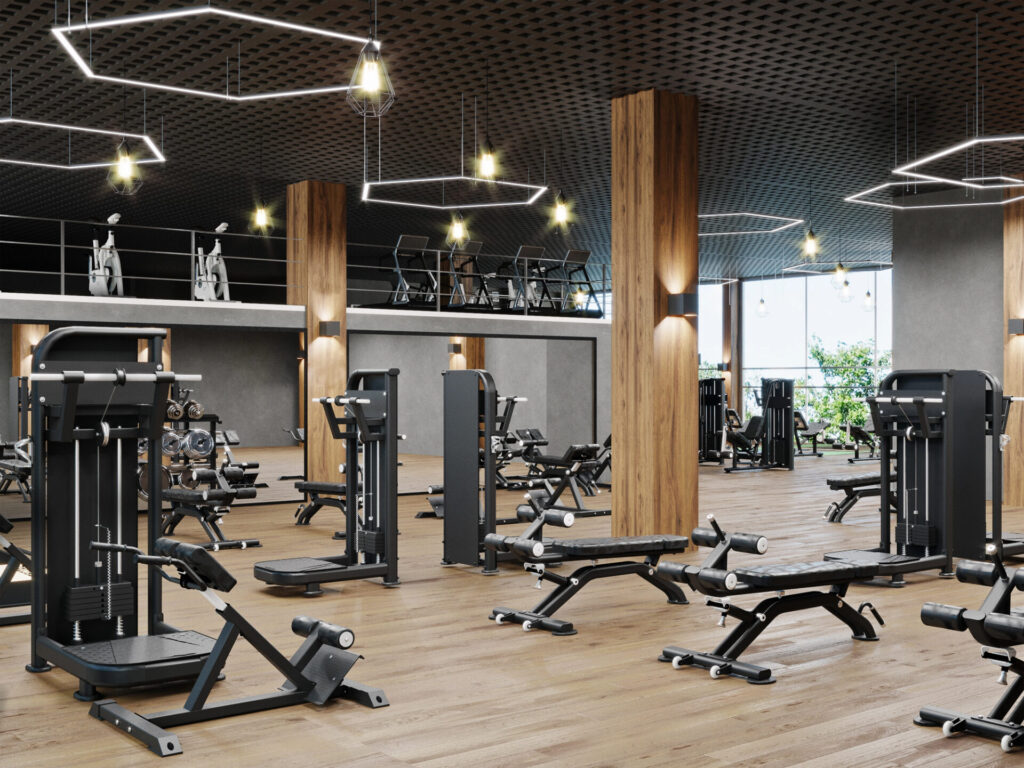
Modern gym interior with sport and fitness equipment, fitness center interior, interior of crossfit and workout gym, 3d rendering
Written by Adam Atkins, Co-Founder and Chief Executive of Coat Facilities Group.
First impressions might matter, but for leisure facility members the second, tenth and hundredth impressions matters just as much. A singular concern around cleanliness or maintenance on one visit is rarely enough for them to leave and never return, but a consistently poorly presented building can be a crucial reason behind cancelled memberships and lost custom – costing the industry millions of pounds every year.
High-spec equipment, great customer service and value for money are all undoubtedly key factors which sway people to choose one leisure facility over another, but the state of the building plays an integral role in their overall impression of their visits, and by proxy of the brand as a whole.
A poorly-maintained, unclean or dilapidated building is something which sticks in people’s minds – which means first-rate facilities management (FM) is not just a tick-box exercise, it’s a core commercial driver for every leisure business.
A cost or a value?
When procuring an FM provider, it may seem logical to opt for the cheapest tender – after all, margins can be as low as 1% for council-run facilities (according to the Local Government Association) and between 10% and 20% for privately-run businesses, as reported by Vanta Insights. So, saving money where possible is a sensible strategy. Until you look more deeply from the perspective of ‘what value is this service adding’ rather than ‘what is it costing’.
With the Health & Fitness Association reporting an average retention rate of 66.4%, it is imperative that leaders consider why the departing third chose not to continue their membership – and act upon any factors which are within their power to change. But how much of a difference does poor FM actually make?
A lot, according to various studies. Whilst not getting enough use out of their membership and relocating are common reasons cited, cleanliness and other building-based qualms are consistently among the most popular causes of membership cessation. A huge 370,000 cancellations across the UK and Ireland were analysed by Xplor Technologies, Active Insight and GGFit – with 6% being blamed on poor FM. Based on a UK average cost of £48 per month, that equates to £426 million potentially being lost by the industry every year.
The customer experience
FM is one of those services which is rarely noticed when it is all working excellently, but when something goes wrong, it can fundamentally impact the experience customers have within a leisure facility.
Broken air conditioning equipment, unsuitable lighting, unclean changing rooms, and out of service equipment – these all affect how someone views the building. And every visit can reinforce (or damage) brand perception, with only so many ‘second chances’ given before a customer gives up altogether and votes with their feet.
It’s this brand perception which is so integral. Poor FM standards are directly at odds with the messaging most companies will be selling in their marketing and sales efforts, where wellbeing, health, contentment and confidence are all important concepts. Yet a heating system which doesn’t work, faulty electrics, and empty soap dispensers in the changing rooms tell an entirely different picture, one which jars with the posters of strong and happy looking gym-goers no doubt attached to the walls nearby.
Retention and reputation
We know attracting new members is considerably more expensive than retaining existing ones, meaning each experience matters. Customers understand that things occasionally break or get to the end of their useable life – but if a one-time inconvenience turns into a series of problems every time they visit, that’s when their patience grows thin.
Having the right team in place, providing preventative and predictive intervention as well as reactive maintenance, is essential to helping reduce cancellations, improve reviews (which in turn helps bring in new custom), increase referrals, and encourage longer visits which promote secondary spend such as within the café area if available.
This means the cost of FM can actually be offset by the revenue operational excellence is generating – creating value for the company in the long run. Customers also see the value, too. Not just in the atmosphere, safety, cleanliness and comfort of every visit, but in a world where sustainability is high on many people’s agenda, a company’s commitment to energy efficiency, lower water consumption and better air quality demonstrates environmental responsibility which in turn helps secure and retain members.
Having a tailored handyman regime with compliance activities built into it can significantly cut the expense of reactive maintenance. But, more than that, it enhances brand value is a visible sign to members that maintenance is being taken seriously. Ultimately, it is important to ensure the chosen solution meets all requirements on a site-by-site basis.
Best foot forward
FM is, of course, about much more than simply keeping the structure of a building maintained and the areas within it clean. With the onset of new technologies, there is always more which can be done to scale up from good to excellent. Many operators are now investing in digital building management systems to reduce downtime, while real-time fault reporting can also enable repairs to take place before complaints escalate. Occupancy data helps inform cleaning schedules, and smart HVAC systems can improve comfort while reducing energy consumption.
While all of these systems may be invisible to the customers using the facilities, they will make a difference to their experience. Because FM may traditionally be thought of as a back-of-house function, but in reality, it’s a core part of how a leisure brand is viewed publicly.
The condition of the building shapes every visit, every review, and every renewal. It directly affects the decisions of 700,000 people each year who cancel their membership and seek a better alternative. And that’s why the FM investment isn’t just about maintaining assets: it’s about protecting reputation, strengthening customer loyalty, and securing the long-term future of the business.