UK Agrifood Network Secures Funding to Tackle Antimicrobial Resistance
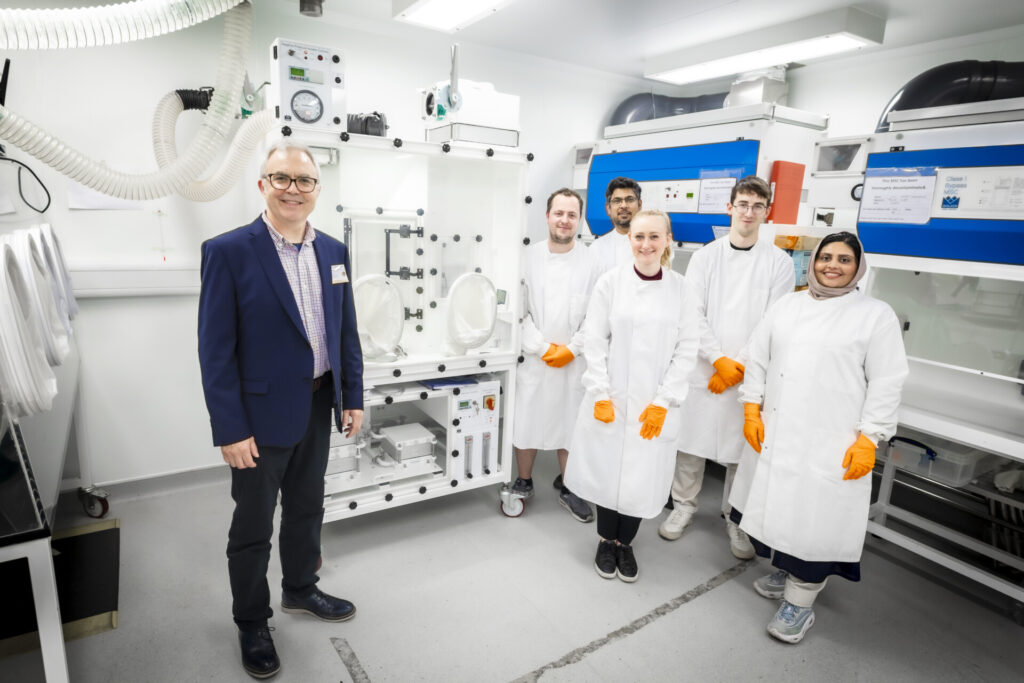
Dr John Pearl and research colleagues, from left: Keiran Dewing, Dr Mrinal Das, Megan Atherton-Frisby, Luke Newman, and Sadaf Sulman
A UK-wide research network has secured funding for a five-year programme to help farmers, vets and food producers address the practical challenges behind antimicrobial use.
The Antimicrobial Resistance in Agrifood Systems Transdisciplinary Network, known as AMAST, is one of 18 research and innovation projects receiving a share of a £54 million investment from UK government partners and UK Research and Innovation (UKRI). The wider funding package will address biosecurity threats, including antimicrobial resistance, future epidemics and livestock diseases.
AMAST brings together farmers, veterinarians, industry representatives, researchers and policymakers. Its new programme will develop and test approaches designed to support responsible antibiotic use while protecting animal health and farm productivity.
Since its establishment in 2024, the network has grown to more than 250 members. Their work has identified barriers to further progress, including disease pressure, diagnostic uncertainty, gaps in data and the economic realities facing producers.
Dr Matthew Gilmour, who leads AMAST at the Quadram Institute, said: “UK agriculture has already made major progress on antibiotic stewardship. The next gains will not come from simply telling farmers and vets to use less; they will come from solving the real problems that still drive antimicrobial use: disease pressure, availability of alternative medicines, diagnostic uncertainty, data gaps, economics and trust.
“AMAST brings the people who deal with those challenges every day together with researchers and policymakers to design solutions that work in practice. This investment lets us move from identifying the barriers to testing and embedding what works, while protecting animal health and keeping antibiotics effective for the future.”
The programme will concentrate on three areas. In pig farming, researchers will work with farmers, vets and advisers on farms experiencing persistent disease and antimicrobial-use challenges. Swine dysentery will provide a model for examining how diagnostics, biosecurity, management and decision-making can work together.
For sheep and cattle producers, the focus will be on implementing the UK Ruminant Antibiotic Stewardship Roadmap. The roadmap, developed with farmers, vets and industry experts, is due to launch at the British Cattle Veterinary Association Congress on 15 October.
Work led by the Royal Veterinary College, Royal Holloway University of London and the Royal Agricultural University will develop trusted methods for collecting and using antimicrobial data. These are intended to help farmers and vets understand antibiotic use, benchmark progress and make informed decisions.
The third area will explore approaches applicable across livestock, aquaculture, gamebirds and crops, drawing on international experience. Environmental issues, including antimicrobial residues in manure, soil and water, will run across the programme.
AMAST will also train early-career researchers and establish an international expert panel to share findings.
The wider £54 million investment is coordinated through UKRI, with co-funding partners including Defra, the Foreign, Commonwealth and Development Office, and the Department for Health and Social Care. It aims to strengthen biosecurity, improve food security and support sustainable economic growth.
Further information: AMAST Network